AOD-9604
hGH fragment 177–191 with N-terminal tyrosine
from €46.00
5 mg · 2 variants
Currently unavailableNo released batch
Purity: test pending
Intended useFor research use only. Not for human or veterinary use.
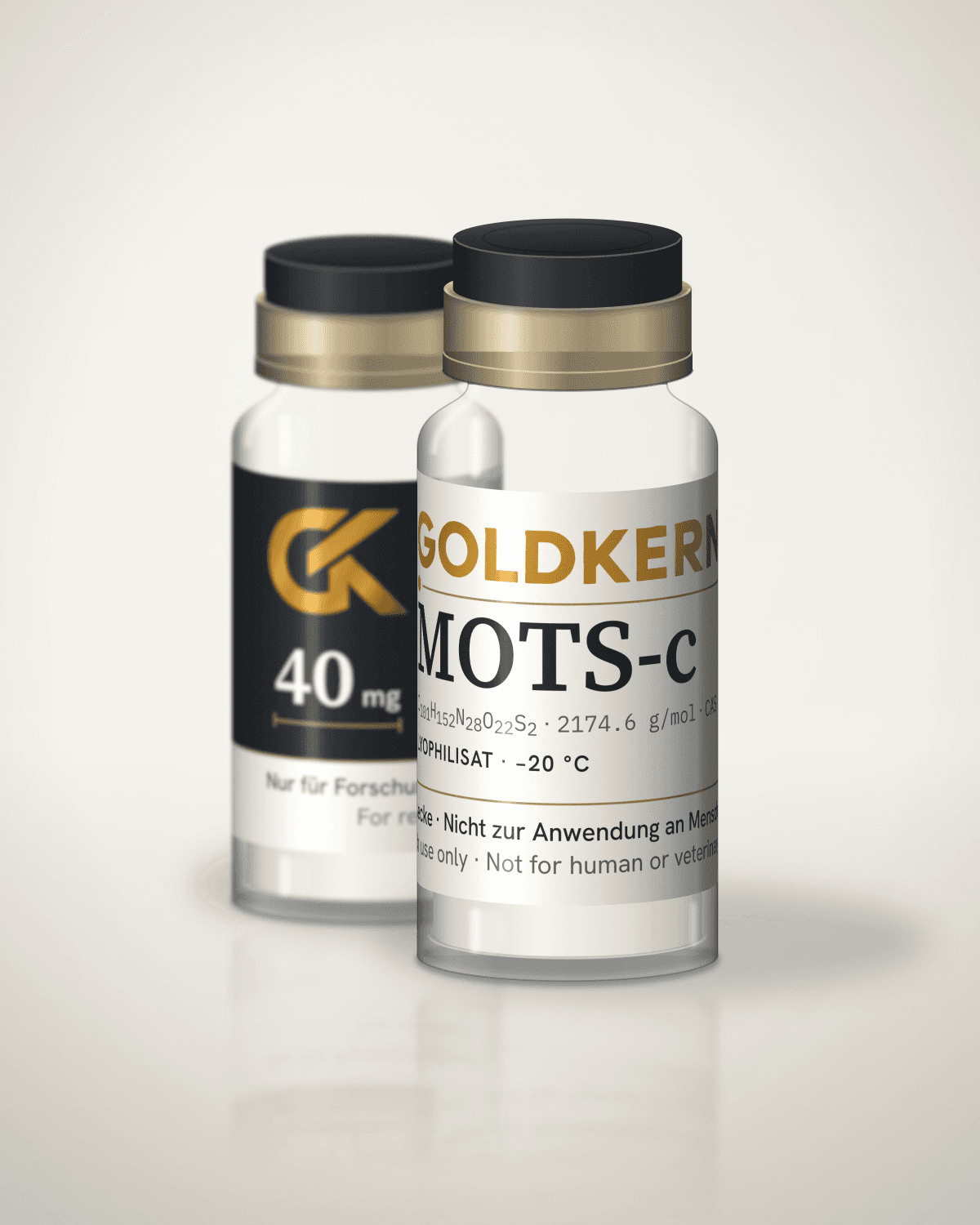
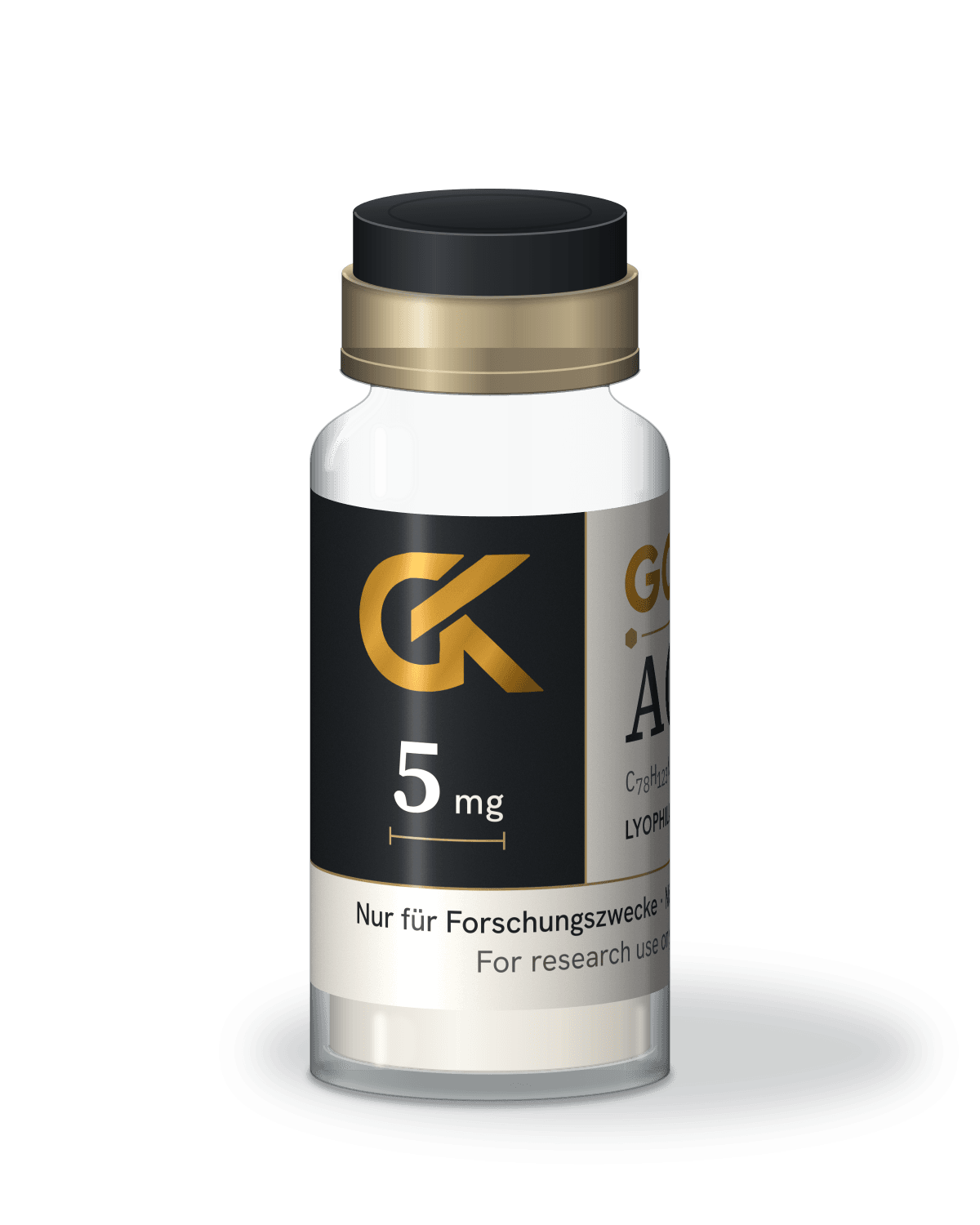
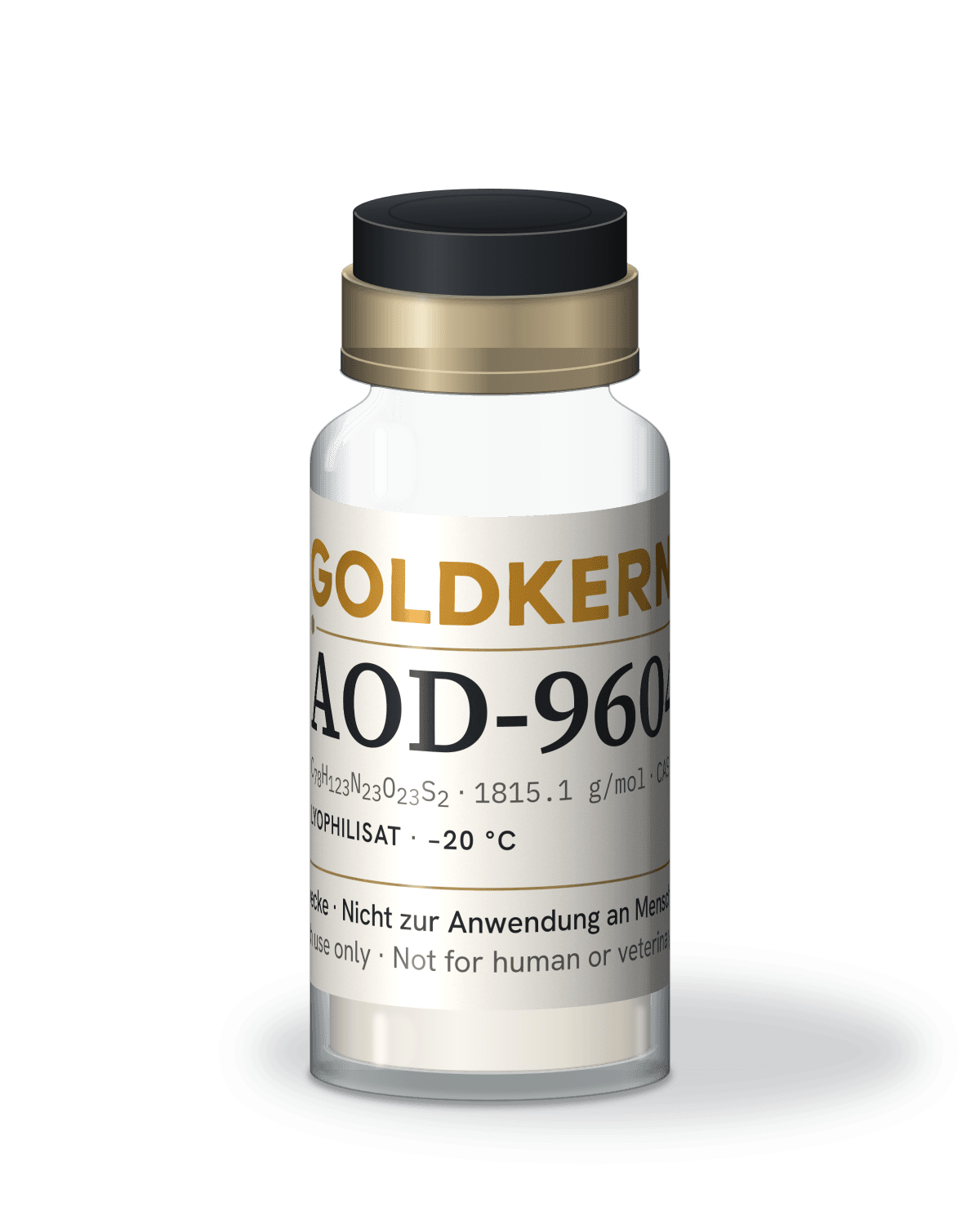
Illustration: digital rendering with the original label, not a photograph – vial, closure and contents may differ.
Lyophilised powder
Mitochondrially encoded peptide · 16 amino acids
A 16-amino-acid peptide encoded by a short open reading frame within the mitochondrial 12S rRNA gene, supplied as lyophilised research material.
Price
€109.90
Shipping to Germany from €5.90. Free shipping from €150.00.
Get notified when available: Sign in
Delivery to Germany in 1–2 business days
Current batch:No batch published yetNo released batch
Purity
No published result yet
HPLC
Identity
No published result yet
LC-MS / mass spectrometry
Heavy metals
No published result yet
ICP-MS
Endotoxins
No published result yet
LAL test
MOTS-c stands for “mitochondrial open reading frame of the 12S rRNA type-c”. The 16-amino-acid peptide is encoded by a short open reading frame within the mitochondrial 12S rRNA gene and was first described in 2015. It therefore belongs to the group of mitochondrially encoded peptides.
MRWQEMGYIFYPRKLRGOLDKERN supplies MOTS-c as a lyophilised powder in a sealed vial. Every delivery is assigned to a batch; analytical data and the COA are published per batch as soon as they are available. The material is intended for research use only.
| Property | Details |
|---|---|
| Form | Lyophilised powder |
| Appearance | White to off-white powder |
| Modifications | None (free N- and C-terminus) |
| Counter-ion | Stated per batch in the COA |
| Net peptide content | Stated per batch in the COA |
| Purity (HPLC) | Stated per batch in the COA |
| Identity (LC-MS) | Stated per batch in the COA |
The quantity shown for a variant is the nominal amount per vial. The figures in the COA of the delivered batch are binding.
Batch-specific values are stated exclusively in the certificate of analysis (COA) of the respective batch.
Every batch has its own test data. Choose a batch to see purity, laboratory, test date and status. Values only appear if they are recorded for exactly this batch.
No batch has been published for this product yet.
MOTS-c is the subject of scientific publications that come predominantly from preclinical research – in-vitro studies and work in animal models. As a mitochondrially encoded peptide, it is studied mainly in metabolic research, for instance in the context of communication between mitochondria and the nucleus.
The Goldkern Lexicon puts the current state of research into context, with cited sources.
GOLDKERN makes no statements about efficacy or use. The material is intended exclusively for laboratory research – not for human or veterinary use.
Assignment to a research area describes the field in which the substance is the subject of scientific investigation. It is no statement about effect or suitability.
The sequence contains methionine and tryptophan, both of which are sensitive to oxidation. Reseal opened containers promptly; in laboratory practice it is common to blanket the headspace with an inert gas such as argon or nitrogen.
Information on hazards and disposal is provided in the safety data sheet, where one is available for the product.
The following points describe general laboratory practice for lyophilised peptides. They do not replace a validated standard operating procedure and deliberately contain no quantities or concentrations.
Concentrations can be converted purely mathematically with the Goldkern Lab Calculator.
No documents have been released for this product yet.
Further reference materials from the same research areas.
hGH fragment 177–191 with N-terminal tyrosine
from €46.00
5 mg · 2 variants
Purity: test pending
Modified peptide · 39 amino acids
from €79.90
10 mg · 5 variants
Purity: test pending
Small-molecule research compound
from €51.90
5 mg · 2 variants
Purity: test pending